About Kevin
He’s talked coffee with Oprah Winfrey on national television, been featured in USA TODAY, The Chicago Tribune and other national publications, and discussed coffee and coffee brewing methods on ABC-TV’s 20/20, The Food Network and countless radio talk shows.
In 1995, he created The Coffee Companion, the first-ever consumer publication dedicated to finding and brewing the world’s best coffee. The Coffee Companion offered his unique blend of wit and passion in methodical, objective reviews of coffee brewers and related equipment. His moniker is Coffee Kevin. The Coffee Companion newsletter was considered ground-breaking as the articles focused on the information needs of the coffee drinker written with a Mark Twain style of humor. Original custom art-work was created for each issue by Robert Voigts of Wordsworth Design, a mega-talented artist and graphic designer. His custom coffee cup art was new for each and every issue. Printed on the finest quality heavy-weight cream stock each issue is unique and is now considered a highly regarded coffee collectable.
Currently, the CoffeeCompanion.com carries on Kevin’s role as Coffee Brewing Authority. Brewer manufacturers both eagerly await and fear his honest reviews and media outlets seek his straightforward expertise as one of the only independent coffee experts. Sinnott is unique in that he does not work directly for any coffee company, yet is considered among the most knowledgeable experts, particularly on the subject of brewing coffee.
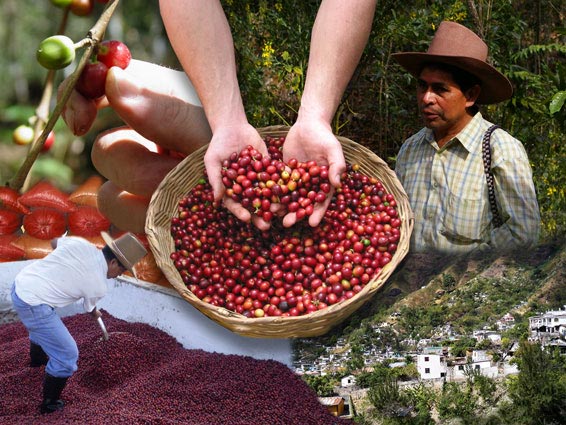
Kevin is a television producer and his company Sinnott Productions created the first ever coffee reality series, Mission Coffee Can. This series about a group of college students who travel to Guatemala to learn about and market a new direct trade coffee was a ConnectedWorld.tv awards finalist at The 2011 International Broadcasting Conference in Amsterdam.

He also produced the definitive coffee brewing DVD, Coffee Brewing Secrets. Kevin traveled the country and interviewed the nations top experts on coffee and brewing. Each expert demonstrates their favorite coffee brewing method. Experts include veteran coffee writer Kenneth Davids, Allegro Coffee’s Christy Thorns, Terroir’s George Howell, Boyd Coffee’s Randy Layton, Peet’s Jim Reynolds, Oren Bloostein of Oren’s Daily Roast, The Queen of Green, Erna Knutsen and Tea and Coffee Trade Journal’s Donald Schoenholt.
On February 25th 2012 Kevin will be hosting CoffeeCon 2012, in Warrenville, Illinois. This will be the first ever consumer coffee symposium in the World. Attendees will taste different varieties, roasts and brewing methods. Top experts will teach brewing techniques live as advanced users hone their skills.



{ 22 comments… read them below or add one }
Hi Kevin,
Do you know of any stainless steel coffee presses/french presses that are not made in China?
thanks!
Sam
Hi Sam,
My first thought is none, although there is the Espro made in China and Canada. I suspect the stainless steel is all Chinese. I’ll keep an eye out, however.
kevin,
I bought and tested the zojirushi 5 cup and found that the water leaving the brew port is much cooler than you measured. More like upper 180s! What gives? Also have you tried the very newest from Melitta the 10 cup thermal brewer? (came out 2 months ago)
mike
Hi Michael,
I measured right beneath the spray head. During the first minute I got upper 180s, then it rose into 190s, mid and above for the rest of the brew cycle. Of course, yours might be defective. I’ve posted a review of the Melitta (branded Bonavita) coffeemaker. I suspect you’ll be happier as it runs slightly hotter overall and climbs to temperature altitude faster. Neither has the ruler flat Technivorm 200F solid line for its entire cycle. I find, however in real-world conditions, you’ll best the best coffee from a brewer that gets all the grounds wet first and foremost. Temperature and contact time are also important, but a few degrees or a minute are actually less critical to me, although my published time and temperature results are accurate. 180s is a product defect or measurement error. Hope that helps.
dear kevin
the melitta 10 cup i speak of is only on the market for 2 months and is made by hamilton beach. Let me know if you plan to test it anytime soon.
I tested the zojirushi many times over with a reliable instant read thermometer.
I also conducted comparison tests of the final temperature of the entire pot ,using a preheated pot of course. The Zojirushi gave a reading of 178 degrees, whereas the Black and decker Brewn go, my Keurig, and the new Melitta gave “in the pot readings”of 184 degrees.
Your comments on all this are very much appreciated.
(I so wanted to fall in love with the Zojirushi after seeing your video! I have it. Sell me on it!)
Michael
Well, I want to assure you I didn’t test my sample casually, but I don’t want to sell it. That’s someone else’s job. I always hold the probe directly underneath the hot water exit. I generally use room temperature bottled water. Are we matching so far? If so, you have a defective product. Zojirushi appears to be a customer service-oriented company. I’d let them send you a new one. Hopefully it will perform to spec.
Kevin,
Can you recommend a good thermometer for testing coffeemakers?I have been using an instant read meat thermometer but it takes 10 seconds to get a reading.
One more question. I use a Capresso Infinity bur grinder. How can I be sure I am using the right settings? I heard “like sugar” is a good grind for drip so on my machine I have to go all the way to just shy of “extra fine” to get that. Sound correct?
kevin,
I don’t understand the fuss about the need for a drip coffee maker to complete the pot in six minutes (or whatever time one believes in). This makes sense, to me, only in a french press technique, wherein, the longer you take, the more extraction you get. But with drip, even if I hand pour my water slowly over a 20 minute period (assuming cooling not an issue) each drop only spends the same amount of time passing through the grounds as in a quicker pour. Hence the extraction degree should be the same regardless of the time it takes a machine to spit out all the water. The grind, the paper thickness, the hole size in the cone-they should matter-not the pour speed. What did I miss?
kevin,
I don’t understand the fuss about the need for a drip coffee maker to complete the pot in six minutes (or whatever time one believes in). This makes sense, to me, only in a french press technique, wherein, the longer you take, the more extraction you get. But with drip, even if I hand pour my water slowly over a 20 minute period (assuming cooling not an issue) each drop only spends the same amount of time passing through the grounds as in a quicker pour. Hence the extraction degree should be the same regardless of the time it takes a machine to spit out all the water. The grind, the paper thickness, the hole size in the cone-they should matter-not the pour speed. What did I miss?
Hi Michael, thanks for asking. Well, the truth is that the hot water contact time is very important to the flavor of your coffee. I realize it’s easy to see it a series of events, as if every six ounces makes its own cup of coffee in contact with the grounds. What really happens is the grounds are only able to give so much flavor and the best flavor is released early as hot water surrounds it. Grinding finer hastens the extraction process. Even with a medium coarse grind, the grounds turn bitter after seven minutes or so. This is why many coffeemakers that take 12 minutes or more to brew produce such horrible results. For drip grind, six minutes is a safe time.
Kevin,
Have you ever reviewed Black and decker’s Brew “N’Go , model dcm18?
It is a one cup (14 oz) brewer that gets very hot, 800 watts, great spray pattern and cycles in under 4 minutes. Can use a #1 cone filter.
kevin
please reply to message re brew-n-go model dcm18
Yes, well I’ll have to see if they are available. Black and Decker rarely submits one for review and the last time I bought and tested one, it did badly. I am always ready for a repentant coffeemaker manufacturer and will test one when I get one or can afford to buy one. I certainly am on the lookout for a decent one-cup that does not have the Keurig’s carbon footprint.
It all dpneed on how the coffee was made.For example, espresso which is extracted with high pressure releases most of the coffee flavors in the form of crema (millions of micro-CO2 bubbles filled with coffee aromats) . And crema is really fragile and loses its flavor and aroma as those micro bubbles burst, and in a matter of minutes you end up with a stale bitter coffee.However if it is drip coffee or plunger coffee, the flavor is directly infused into the hot water, so it takes longer for the coffee to lose its flavor. Whether you keep it hot or cold is not an big issue as the main thing that contribute to flavor loss is Oxygen. Similar to wine coffee loses flavor when it start oxidizing
Kevin,
Just got home from Coffee Companion. Was time very well spent as I am getting closer to launching my roast works. As rarely get past Western Avenue, I found George Howell’s presentation to be particularly insightful; that was worth the drive alone! Additionally had a wonderful conversation with Oren, his wife and son. Thank you I appreciate your organizing efforts.
Best,
Tim Coonan
Great to hear, Tim. We had a great time putting it together.
Hi Kevin:
I have not corresponded with you in many years. Hope you are doing well.
Last time we e-mailed you mentioned the vacuum pot is a favorite brewing method of yours.
In your opinion, is the character of coffee brewed with the vac pot not as full bodied as coffee made with Chemex or French press? I use the same grind as Melitta drip (fine, as you suggested) with the vacuum pot and the ideal coffee/water ratio, but the coffee always comes out a bit weak. I am using a 5 cup stovetop Yama brewer. Any suggestions?
Thanks,
Scott
Hi Scott, yes, I like vacuum pot coffee just fine. I’d guess you are going everything right, but I’ll suggest grinding finer. I’m assuming you’re using 10grams per 6 oz of water. The vacuum may seem lighter bodied, but mostly because the acidity is so high, it’s just ever-so-slightly lower in the balance. But, it should definitely not be body-less. How long is the contact time? If it’s less than four minutes (from time the water shoots up there until all the coffee is back down below, grind finer. You can get away with a pretty fine grind for the vacuum.
Let me know how it goes. I can’t let you miss enjoying this fine method.
Kevin,
I was wondering if you could compare the drip/coarse grinds from the Baratza Preciso to that from the “new” Vario, the Vario with the new metal burrs installed. People have told me that the metal-Vario does a great drip grind now (the ceramic burrs, of course, were not so good), but to my knowledge nobody has compared the metal-Vario to the Preciso. I imagine that you’re in a good position to do so, and I great respect your opinion so I thought that I would ask! Look forward to hearing your thoughts.
Best,
William
Hi William, I will be happy to if Baratza sends them to me. I have to tell you in advance that I doubt it. It is unlikely that flat burrs can ever match conical burrs for coarse grinds in this size category. But, I’m prepared to be evangelized. I’ll contact Kyle @Baratza and request a rematch using the metal burrs.
Interesting, if that’s the case I wonder why coffee-shop bulk grinders for brewed coffee, the Dittings and Mahlkoenigs, use flat-burrs
Sure Michael. I use an Omega HH-25KF digital thermometer. It’s fast and accurate. http://www.omega.com/pptst/HH-25_26.html
{ 1 trackback }